

The Story of the Royal Docks
Long before 3 Minutes East becomes home to a new generation of East Londoners, the Royal Docks were among the busiest working docks in the world. Their story stretches from Victorian engineering and decades of decline to one of London’s biggest regeneration projects, and students are at the heart of this new era.
From Empire to Empty
This tale begins in 1855, when Royal Victoria Dock opened as the first dock built specifically for steamships. It was also the first in London to use hydraulic power and connect to the national railway network. These innovations made it the most advanced dock of the day and a template for many subsequent developments.
Royal Albert Dock followed in 1880, expanding the docklands to the east. The final piece arrived in 1921 when King George V opened the docks that share his name. Together, the Royal Docks formed the largest enclosed dock system in the world, handling everything from frozen meat and grain to passengers arriving from across the globe. At their peak, tens of thousands of people worked across the docks, and the local area grew up with its shipping heritage.
Trade reached its height in the 1950s before the advent of containerisation. Ships soon grew too large to navigate the Thames as far inland as the Royal Docks, and trade began to move downstream to ports with newer technology. The docks closed to commercial shipping in 1981, with thousands of jobs being lost. Left behind were the famous basins and a neighbourhood in need of a new direction.
The Regeneration Begins
The London Docklands Development Corporation formed in 1981 with a mandate to find new life for the area. Progress followed steadily over the next two decades. London City Airport opened in 1987, built directly on top of the old dock quays. The University of East London established its Docklands Campus in 1999, bringing young people back to an area that once employed thousands of them.
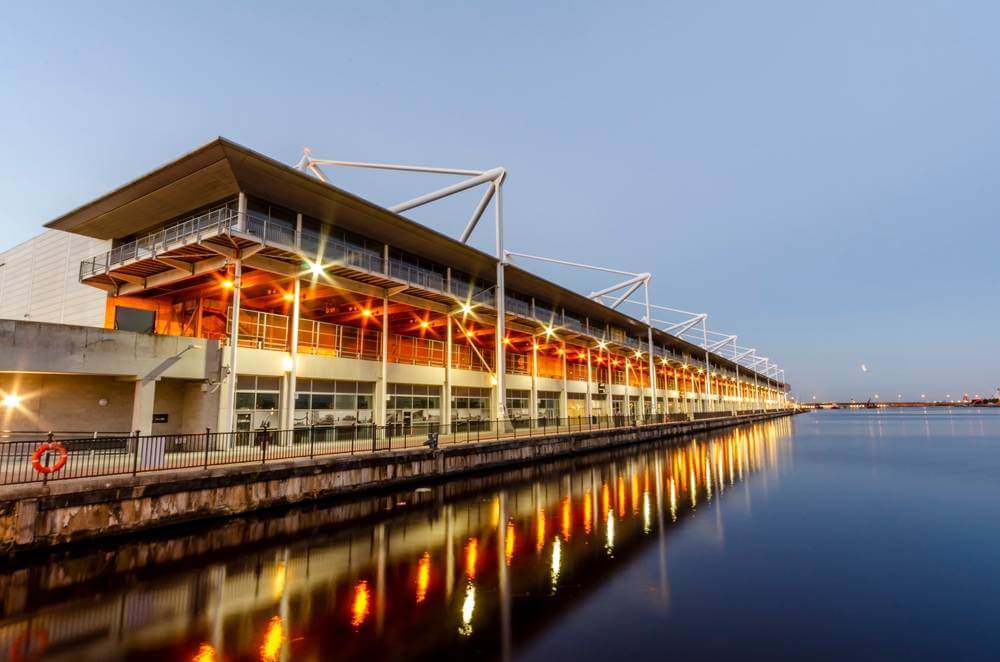
Then, with the dawn of a new millennium, came the ExCeL London. Opening on a 100-acre site along the old Royal Victoria Dock. What began as an ambitious project grew into one of Europe’s largest regeneration projects, and by 2012, ExCeL was hosting Olympic boxing, judo, and table tennis as the area saw the world return to its banks.
A New Chapter, A New Connection
Even more recently, the Royal Docks gained a new link to the rest of the city. In 2022, Custom House’s Elizabeth Line connection opened. Journey times into central London dropped dramatically. And the docklands found themselves better connected to the rest of the capital than at any point in their history.
This development has accelerated everything that’s followed. Just across the water, thousands of new homes and restoration projects are taking place. A new pedestrian and cycle bridge is set to link Silvertown with Custom House, increasing the town centre feel of the Royal Docks.
3 Minutes East, What’s Coming Next
This is the neighbourhood 3 Minutes East will call home. Set on the Royal Albert Dock, within easy reach of Beckton Park and the DLR. The development sits inside a story of rebirth that stretches over a century and shows no sign of slowing down. Few student properties anywhere in London can claim quite so much history sitting right outside the front door.
Where dockworkers once unloaded grain and meat from ships arriving from across the empire, students will step out of their door and onto a platform that connects them to ExCeL in minutes and central London in under half an hour. The docks that once defined London’s global trade now define something rather different. They are a place where history, transport, and a fast-growing residential community meet.
It’s a rare thing to live somewhere with this much history surrounding you, and rarer still to watch the next chapter being written. For residents at 3 Minutes East, that’s exactly what daily life here can be.
You’ve found your direction, and there’s plenty more to come.
Table of Contents
